Issues – Quick Read
Affordable Food Waiheke
A while back, Waiheke began a Community Supported Agriculture (CSA) project. It did not last because they could not get sufficient reliable, suitable land. Most productive land on Waiheke is sloped, good for grapes and olives, not market gardens, and the rural homesteading properties, such as the original intent for Church Bay Estates, skyrocketed in price as the uber-rich discovered paradise.
Trust Waiheke is developing a plan that needs Council cooperation. Identify land owners of productive sloped land that lies fallow, negotiate perfect usufruct rent-free contracts for that land. Then secure a restricted discretionary resource consent to divert excavated clay coming from nearby developments, where at no charge, the excavator will use the cleanfill to prepare terraced market gardens. Then provide land is to a community growing group subject to requirements the food stays on Waiheke, the project employs locals, and improves food resilience.
Under RMA s36AAA(3) a project that benefits the community as a whole, as opposed to the land owner or applicant, should attract no council consent fees, but this may need your help. If you support the idea of local food, contact the RMA Team Leader Team Leader (Hauraki Gulf Island) and ask them to take an open-minded position to support this local food plan. Use the Contact link to have us send you the team leader’s email address. And copy Mike Lee, Ward Councillor and the Local Board (send a copy to all members). Read more below:
Affordable Housing Waiheke
In 2000, Essentially Waiheke directed the council to promote a range of housing options by minimising consent costs for appropriate development, and regulating for a range of housing options which will contribute to the provision of affordable housing.” It failed to do so, and in fact did the opposite.
Trust Waiheke examined the law and regulations to find an open-minded interpretation of the existing legal framework would enable mobile homes to be placed on single dwelling sections as detached accommodation, even with kitchenette and bathroom provided it is not fixed to land, and not annexed to title. The key is for the council to adopt this open-minded interpretation and to support mobile homes as an interim, 15-year solution, providing the human right to adequate housing on an immediate basis to give council the time to provide permanent affordable housing.
If you agree, please support this interpretation, encouraging Auckland Council to take an open-minded position and proactively support mobile homes on Waiheke now – not delay for years or decades while people suffer. Use the Contact link to have us send you the team leader’s email address. And copy Mike Lee, Ward Councillor and the Local Board (send a copy to all members). Read more below:
Needed: Proactive Planning in Auckland Council
Waiheke Issues for the Auckland Council
Auckland Council does reactive planning. They notify a district plan in 2006, expecting it to remain relevant 15 years later. The bad news? It’s not working.
The only current system to effect change on Waiheke is to apply for a resource consent on a particular site to which Auckland Council reacts – reactive planning. Documents like the Waiheke Local Board Housing Strategy are worthless wastes of money because there is no system in place to implement critical matters in a timely manner. What is needed is a proactive planner on Waiheke who identifies immediate problems demanding rapid and innovative response, who works inside the system to get past the barriers erected by council staff to keep out the public. Innovative means finding ways to interpret the existing framework, not the glacial process of changing district plans. Can do, or will they continue to just say no?
Affordable Housing:
Using Existing Rules to Solve the Housing Crisis
The Crisis: Affordable Housing on Waiheke is a crisis destroying the social and cultural fabric of Waiheke Island. But the Council, whose purpose includes the requirement under the Local Government Act to play a broad role in promoting the social, economic, environmental, and cultural well-being of their communities, lacks an effective in-house planning group that can respond to rapidly changing, permanently damaging circumstances.
Not Working: The District Plan was notified in 2006. No one anticipated housing costs would rise 300% while household income rose 30%. The Waiheke Area Plan is ineffective. The Operative District Plan is not working. Every week more long-term Waiheke residents are forced to move away or become hidden homeless – people living in cars, tents, garden sheds, garages or overcrowded conditions in the community.
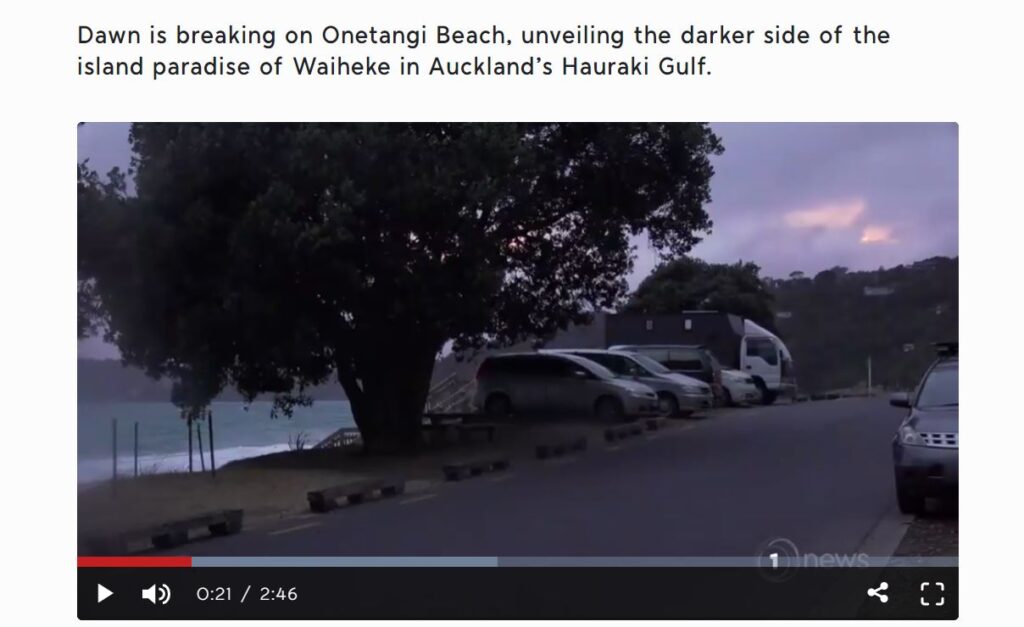
Click image to watch video on https://www.1news.co.nz/2021/02/12/growing-homelessness-on-millionaires-paradise-waiheke-island/
No proactive planning: The upshot is polarisation, dividing communities between the haves and the have-nots, the latter struggling to make ends meet. The council should have a proactive planning group capable of rapid response, but it does not. The outcome is catastrophic to community wellbeing.
Gentrification: As the island attracts home buyers competing for 2nd holiday homes, and landlords converting rental units into Airbnb visitor accommodation, the community becomes hollowed out by hollow homes. The young, born and raised on Waiheke cannot afford to rent or buy, thus they are forced to leave the community they call home – gentrified off. Older people and pensioners, especially women on their own who have rented on Waiheke for decades are evicted by landlords or sales, where they have to place their belongings in storage as they move from one short-term lease to another… until those dry up and they are forced to leave Waiheke or join the ranks of the hidden homeless.
Click image to watch video
Staffing: And then there is the business problem. The working holiday visa has provided the staffing for the restaurants, vineyards, farms and visitor industries, but the first question an employer asks the job applicant is do you have a place to live? This is a severe problem because there simply are not enough bedrooms. Wealthier businesses are buying homes for their staff, while others cut back on hours or go out of business.
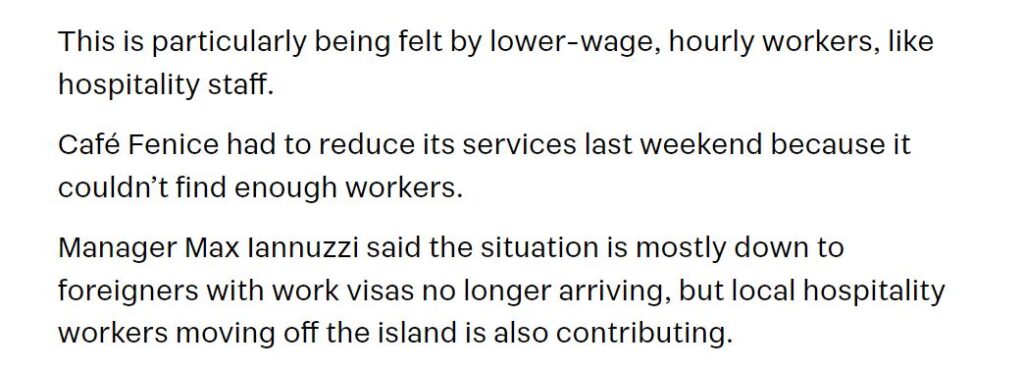
An Interim 15-year solution: Mobile homes (pods)
Mobile homes are abodes manufactured as box trailers. They are made in NZ factories in two weeks, cost about 10% the price of a basic home. They are towed onto site and set up in 2 hours and they do not commit land like a building. They are an immediate, low-cost adequate housing solution.
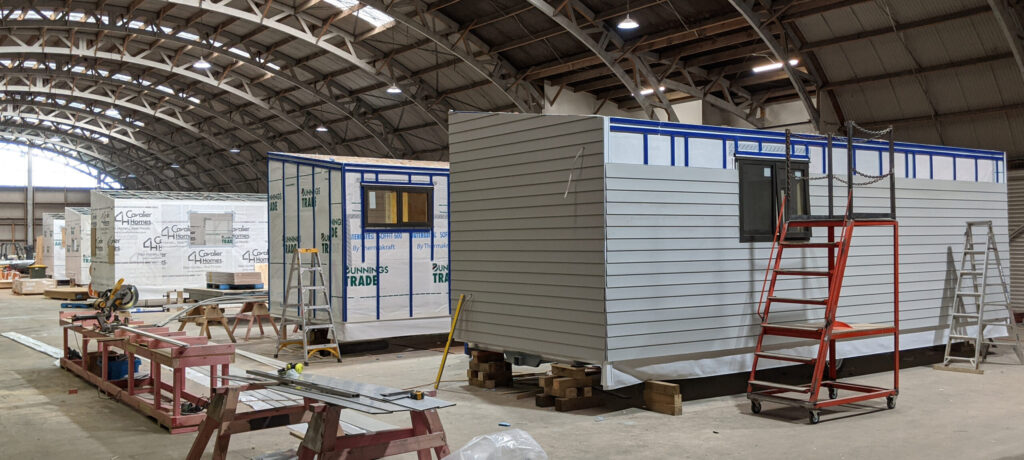
When the need passes, the pods are disconnected from services by the driver (not requiring a licensed professional) and towed away leaving only bare soil. They are a good 15-year interim solution to give council the time it will need to find permanent solutions to the affordable housing crisis.
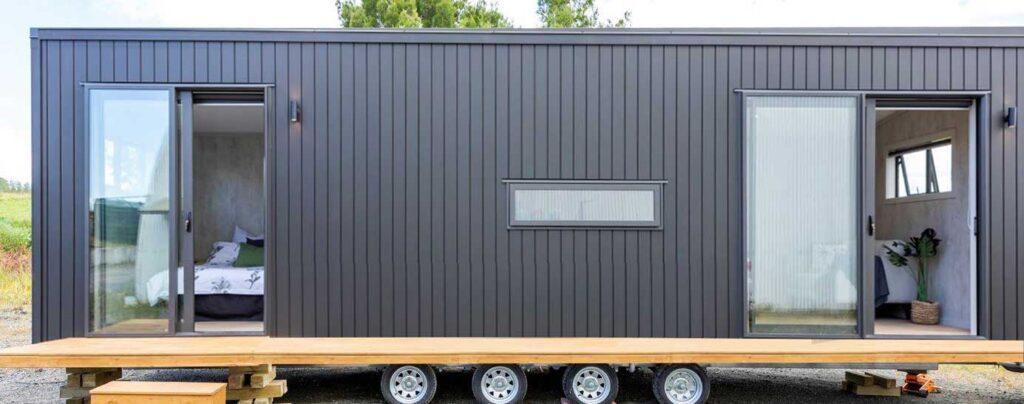
Not Buildings: And, because they are not buildings, they fall into a grey area where it appears neither the RMA nor the district plan anticipated them; thus it does not speak to them. This is where the attitude of the council is crucial. If the officers and management see this grey area as an opportunity to address the crisis, they can address it immediately. No laws, rules or plans need to be changed.
We recommend Council assign a proactive staffer in the Ostend council office, perhaps repurposing one of the staff already serving the local board. That staffer works with the Waiheke Community Housing Trust and other NGO’s to canvas the community for suitable 15-year sites to install mobile homes. Some will be single accessory units attached to a dwelling, but with their own connected pipes for water, wastewater and a caravan type lead.
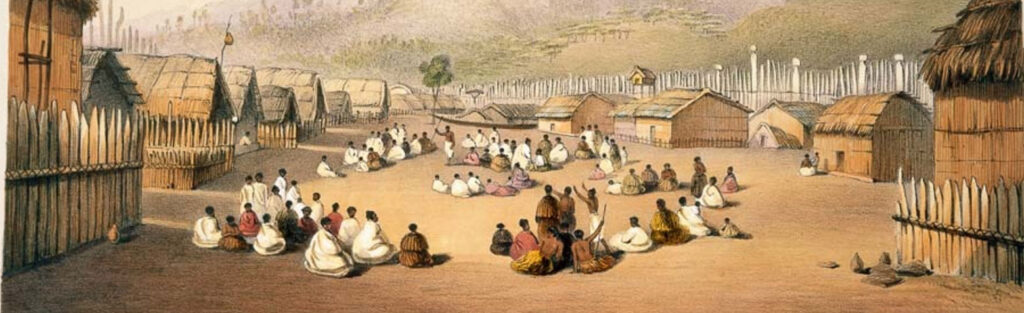
21st C. Kāinga: Others will be larger sites suitable for a kāinga design where there are multiple wharepuni – mobile homes that may have a kitchen & bathroom, or may be set up around a wharekai (central dining hall) and a wharepaku (central toilet block).
How can you help?
Speak Up: If you support having Auckland Council agreeing that affordable housing is a community benefit activity that should attract no council charges, send an email to the Team Leader (Hauraki Gulf Island). Use the Contact link to have us send you the team leader’s email address. And copy Mike Lee, Ward Councillor and the Local Board (send a copy to all members).
If you wish to see council take an open-minded approach to box trailers and mobile homes as chattel shelter that avoids the entanglements of buildings, say so.
Local Food
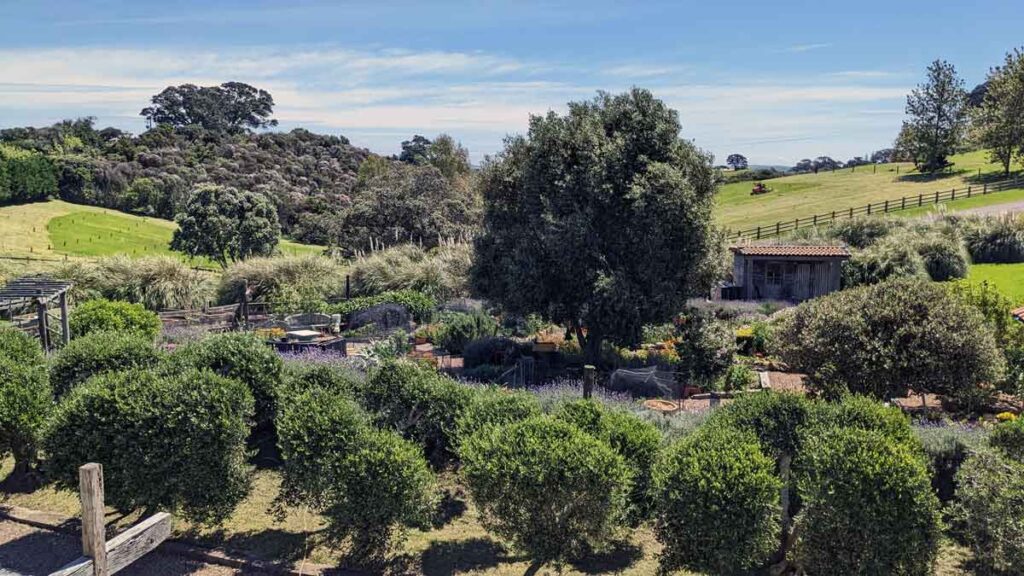
Terraced Market Gardens using surplus productive land
Food: COVID was a wake-up call as ferry service was disrupted, precipitating food shortages in the supermarkets. It is said that if the ferries stop for three days, Waiheke runs out of food. Be it a pandemic or a diesel shortage, the presumption of food security by boat and truck is no longer such a sure bet. It’s time to look at local market gardens growing a wide range of flavourful, nutritious and affordable foods that are grown on the island and eaten on it. From plant to plate and composting the food waste to close the loop.
Homesteads: Waiheke is an island where food grows all winter, an island that used to feed Auckland. It also is an island where the larger Rural Zones, such as Rural 2 Western Landscape were originally conceived as homesteader sections – large plots with a building platform, native reserve and an area zoned for productive use: growing food.
Slopes and lawns: Much of the productive use land is sloped, suitable for grapes and olives, but not market gardens. And over time, these homesteader subdivisions became desirable for expensive holiday homes where the productive land is mowed. Except for the very few who got in early and never sold, the homesteaders were priced out of the market.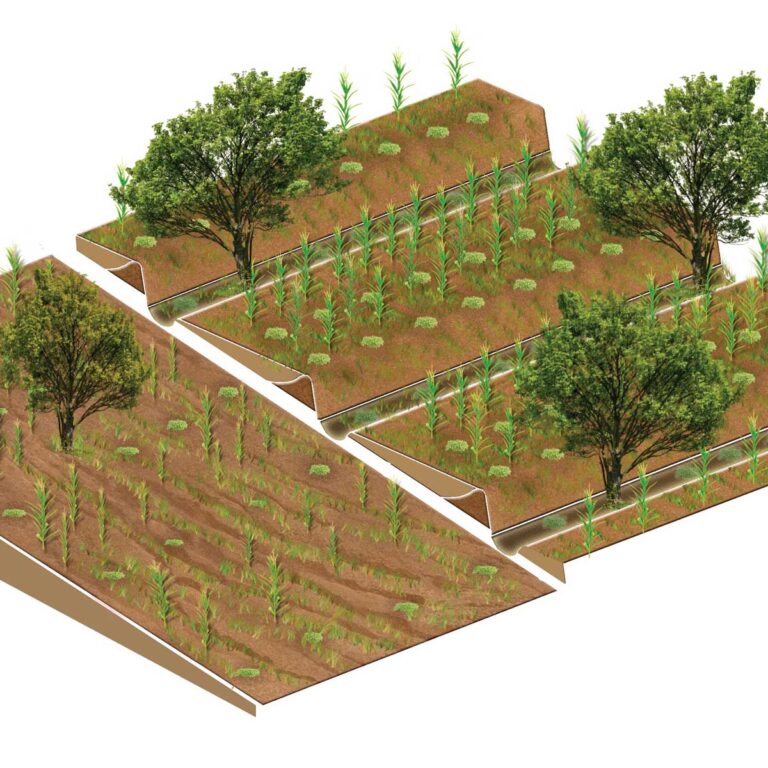
A Plan for the Land
Waste Product: Waiheke has a clean-fill disposal problem. Clay is excavated in large volumes on Western Waiheke during construction projects, then trucked 50 km per truckload to landfills on the eastern end where the construction project is billed about $600 per truckload to dump the clay as a waste product. 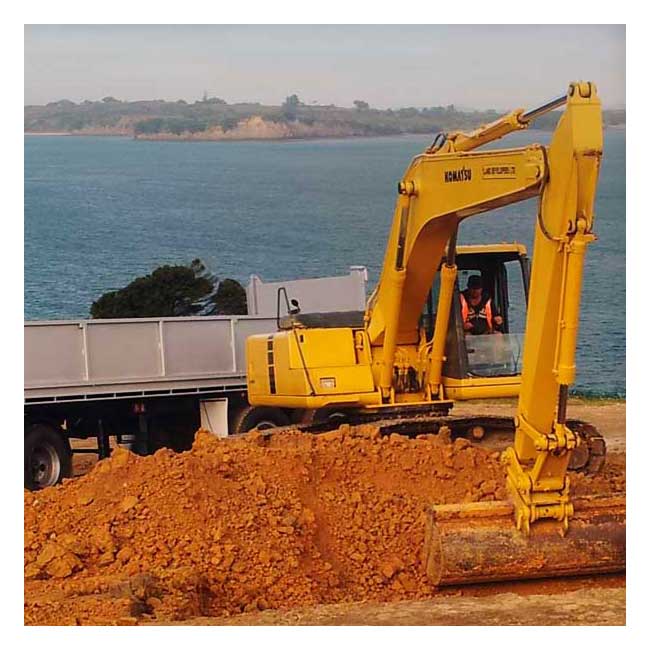
Surplus Resource: Instead of managing it as a waste product, transform the clay into a surplus resource and truck it 5 km to level sloped productive land to be prepared by the excavator as a flat market garden.
No Money Changes Hands: The excavator will prepare the land in lieu of paying to dispose of the clay, crediting the work by the volume of clay delivered to the sloped site. If the land owner wants more work done, they pay. Then the same holds true with the grower. The land must be provided to a growing group on what is called a rent-free perfect usufruct agreement. Usufruct means the grower gets the fruit of their labour. In te reo Māori it is similar to Tuku Whenua where the land use is gifted but not the mana whenua. Perfect means they do not alter the land by things like erecting buildings.
Long Term: The agreement is understood to be as long-term so the growers can plan for a stable business, although it would be cancellable after the end of the current growing season in the event the land was sold and the new buyer wanted it gone. It only will work if the ground use is rent-free, a contribution for community wellbeing and subject to a few rules: the food must remain on the island, and the gardens must be attractive and well-maintained so they are a visual asset.
Resource Consenting Matters
In the past Auckland Council has required significant deposits (such as $7,000) charged a $330 Administration Fee, $90 document fee and $198 per hour for planners to review and approve (or reject) community benefit projects, such as the Waiheke Community Housing Trust’s affordable housing project.
S36AAA: When Trust Waiheke looked into this, it found that this appears to be a breach of RMA section 36AAA, which clearly states the only charges that should be recovered by charging consent applicants are the reasonable costs in respect to the activity – not administrative overhead or a funding source for council and that in the case of applications where the benefit is obtained by the community of the local authority as a whole (i.e. Waiheke), there should be no charges at all.
Asking Council to Respond: Trust Waiheke has asked council to respond. In order to engage with the council, it has to put forth an actually proposal to which the council can react (reactive planning). Thus Trust Waiheke proposed to divert 83 truckloads of clay excavated as a waste product 50 km per truckload to the bottom end. Instead, it would repurpose the clay as a surplus resource, cutting adverse impact on roads and pollution by 90%, to be used to fill and grade surplus productive but sloped land to transform it into level market garden land. This land would be provided rent-free to a community food-growing group to enable food resilience, affordable and nutritious food.
Precedent: If Council accepts this understanding of s36AAA, there would be no charge for such consents. This would enable the drafting of a standard application where only the site and Earthworks Management Plan and Sediment control details changes, making it into a replicable model to take to other private owners of surplus productive land.
The Right Growers: The right growers will be in it for the long haul, know how to farm, grow a wide range of foods for local sale, but also be sensitive to the sights, smells and activity as experienced by the land owner. The gardens should not only be productive and successful, they should be beautiful.
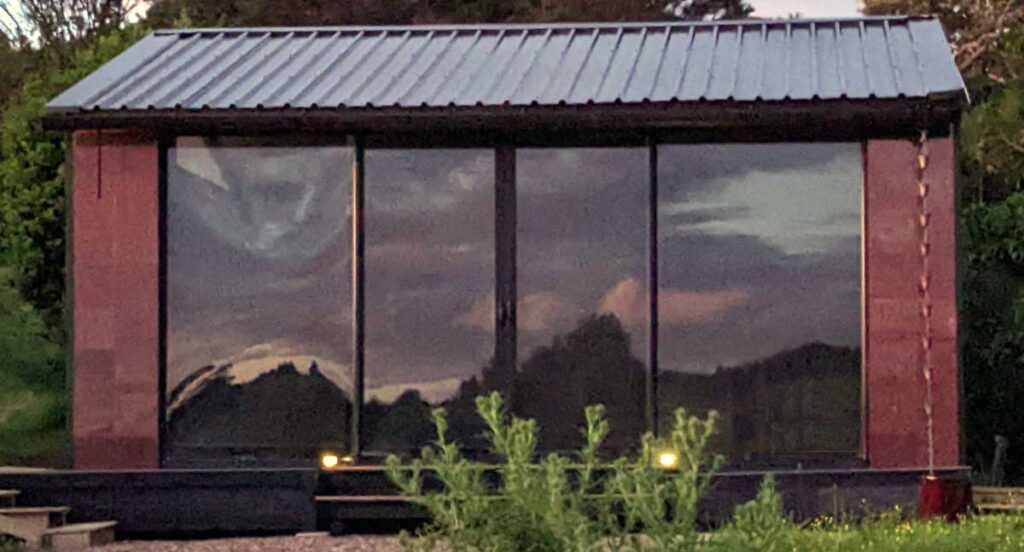
Box Trailers: In addition to the consenting charging issues, the other area where council is asked to make a determination is on box trailers. Under a perfect usufruct agreement, the land owner does not want the entanglement of buildings, but the growers need shelter as part of their business. The solution is what is called chattel shelter, which opens up a much larger conversation.
Not Buildings: In short, while the district plan strictly regulates buildings, which are defined as structures, which is defined in the RMA as fixed to land, it does not speak to shelter that is not fixed to land, such as box trailers on wheels.
What is the legal status of a box trailer under the district plan? Accordingly, in the first prototype application, the council is being asked to take legal advice to determine if such mobile units meet the legal definition of building or not. It is the view of the Trust that mobile units – box trailers and mobile homes – are chattel, whereas buildings are realty – fixtures fixed to land. In the first application, only box trailers that meet the permitted use activities in Rural 2 Western Landscape, such as horticulture and home occupations. Once the determination is made for box trailers, future applications, such as by WCHT, can ask to extend the determination to mobile homes.
How can you help?
Speak Up: If you support excavated clay being converted from a waste product destined for landfill to a surplus resource to terrace market gardens and if you wish to see council take an open-minded approach to box trailers and mobile homes as chattel shelter that avoids the entanglements of buildings, say so. Send an email to the Team Leader (Hauraki Gulf Island). And copy Mike Lee, Ward Councillor and the Local Board (send a copy to all members). Use the Contact link to have us send you the team leader’s email address.
Editorial
Why the mess
20 years ago, council planners called themselves civil servants, and they tended to have civil engineering backgrounds and were focused on ensuring as population grew there was adequate, affordable housing which included rezoning rural land for new housing subdivisions.
But then something happened. Those civil servants were replaced by a new breed of officers, team leaders and managers whose backgrounds were slanted toward environmental degrees. They tended to go directly from uni graduation into council planning jobs, writing new operative district plans. They focused on the latter parts of the RMA purposes, parts (2)(a), (b) and (c) protecting and preserving the environment, with scant attention paid to social, economic and cultural wellbeing of people and communities.
In short, while immigration was growing the population, the supply of land to house population growth was artificially restricted by district plans. The price of subdivided land skyrocketed. Then, the consenting process became exceptionally complex and expensive. More than half the job of real estate development became securing permission, typically taking over 30 months to get across the line. This too was passed on to the home buyer, thus the end price rose even higher.
And there is one more problem: Transport. 47% of NZ’s CO₂ comes from transportation, which means the RMA is the largest source of CO₂ pollution in NZ. This is because the RMA plans are all based on the US post-war zoning model which separates home from work, shops, schools, services and recreation. To accomplish the mundane chores of daily life one must drive. Now planners are waging a war on cars with some advocating mass transport, whilst the climate-change specialists promote electric vehicles as the answer.
Neither will work, because both are based on massive global manufacturing and supply systems that can never be made sustainable.
The solution is to move destinations not people. Eliminate the need for vehicles. Don’t ban cars or make it expensive to own and operate them, stop building transport-based subdivisions so people don’t need to move around in machines.
Look at how all societies designed communities before cars, buses or trains. All day-to-day destinations were within walking distance. It’s time to start planning for seven generations and stop this delusionary greenwashing by council planners. To learn more see https://7g.nz.
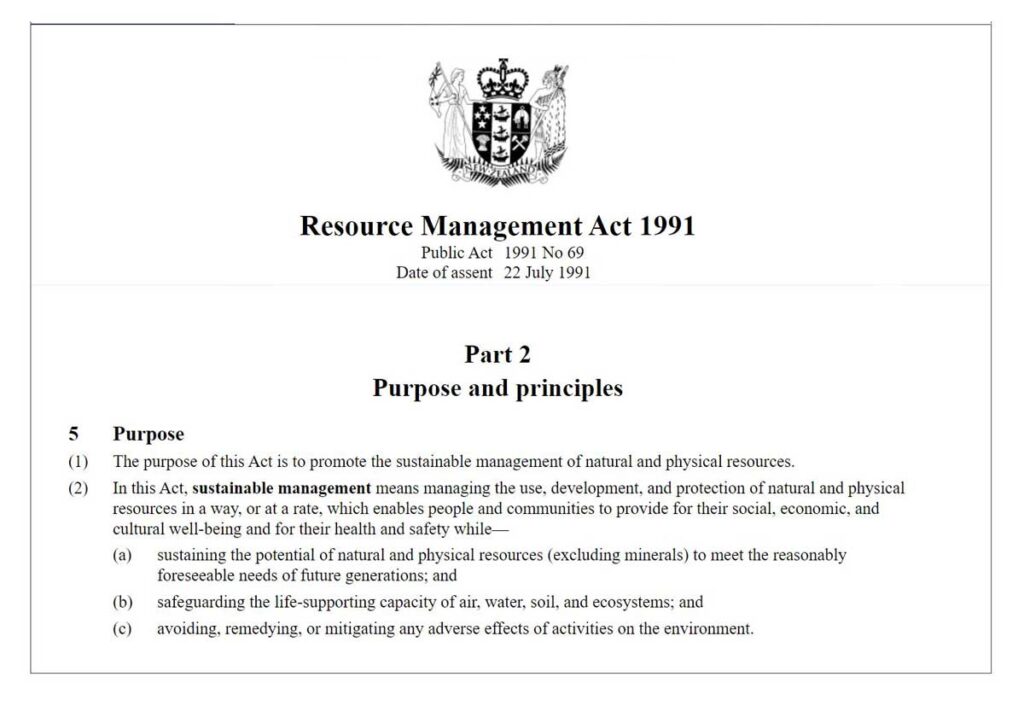
5. Purpose
(1) The purpose of this Act is to promote the sustainable management of natural and physical resources.
(2) In this Act, sustainable management means managing the use, development, and protection of natural and physical resources in a way, or at a rate, which enables people and communities to provide for their social, economic, and cultural well-being and for their health and safety while—
(a) sustaining the potential of natural and physical resources (excluding minerals) to meet the reasonably foreseeable needs of future generations; and
(b) safeguarding the life-supporting capacity of air, water, soil, and ecosystems; and
(c) avoiding, remedying, or mitigating any adverse effects of activities on the environment.